The Secret Is Under the Paint: A No-Mess Prewriting Activity
Sometimes one small change turns a familiar activity into something children want to explore all over again.
For this mess-free paint bag, that little change is tinfoil.
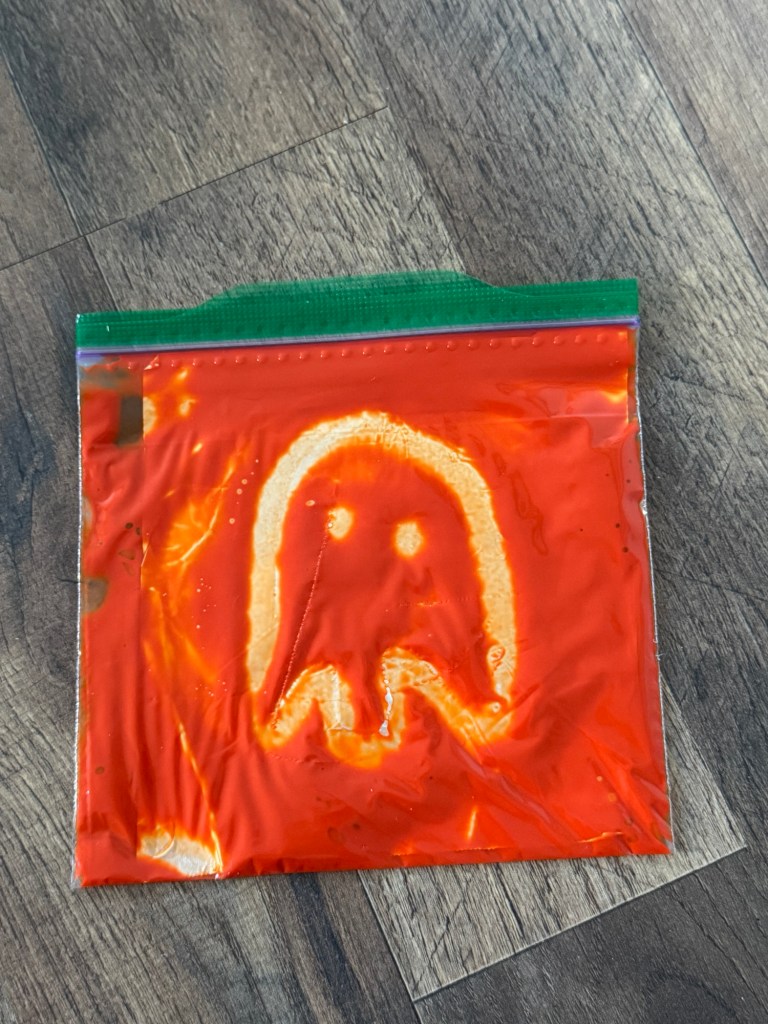
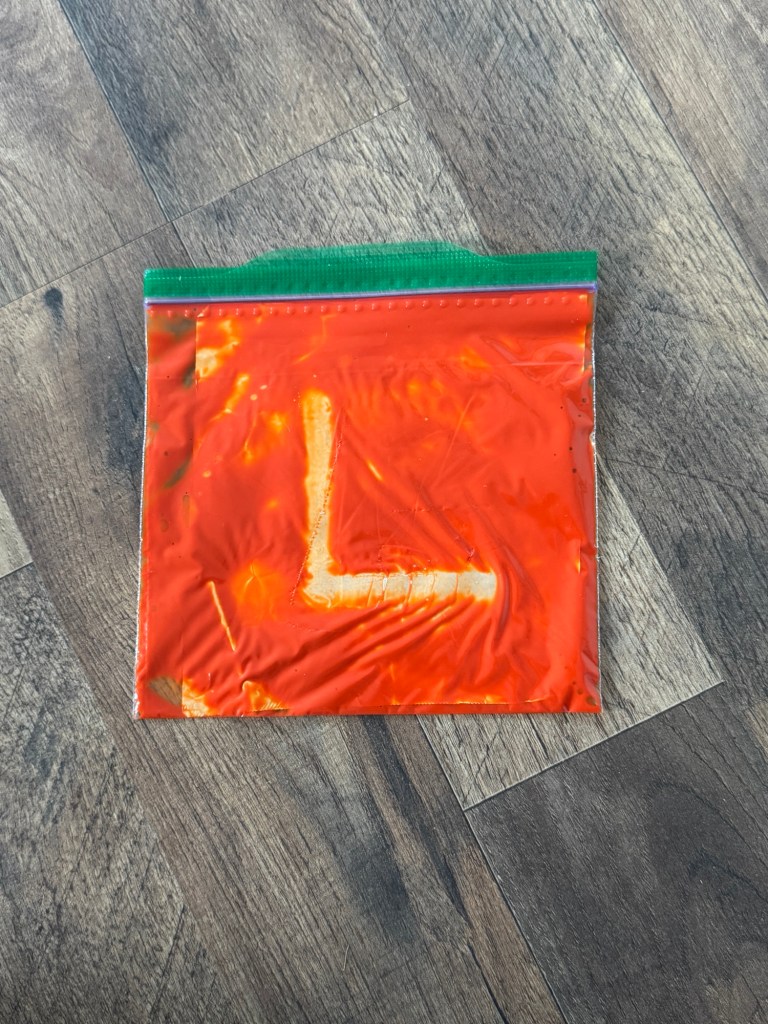
When children move their fingers through the paint, the shiny foil underneath peeks through and makes their marks stand out. The contrast helps children see the lines, shapes, pictures, and letters they create and watching each mark appear feels a little like discovering a secret under the paint.
What You’ll Need
This post contains affiliate links. As an Amazon Associate I earn from qualifying purchases, at no additional cost to you.
- What You’ll Need
- Ziploc bags
- Aluminum foil
- Colorations washable tempera paint (this is the brand I love – it’s so vibrant and washes great)
- Duct tape for creating a strong seal
- Masking tape for securing the bag to a table or work surface
You may already have everything you need tucked inside a kitchen drawer or classroom cabinet. Use what you have. The foil is the one little addition that gives this familiar paint-bag activity its shiny surprise.
How to Make It
- Cut or fold the tinfoil so it fits inside the bag.
- Slide the foil into the bag and flatten it as much as possible.
- Add a small amount of paint on top of the foil
- Press out the extra air and seal the bag securely.
- Tape the zipper closed with duct tape
- Tape the bag to the table for added stability.
The key is to use less paint than you think you need. Too much paint creates a thick layer that quickly fills the marks back in. A thin layer moves aside more easily, allowing the shiny foil to show through and creating stronger contrast.
Draw, Write, and Make Your Mark
Children can use one finger, several fingers, or the side of their hand to explore the paint. There is no single “right” way to use it.
Try:
- Making straight, curved, zigzag, and wavy lines
- Drawing circles, faces, people, or favorite objects
- Creating simple shapes
- Practicing the first letter of a child’s name
- Writing letters, numbers, or an entire name
- Making a picture for someone else to guess
- Using two hands at the same time
- Smoothing the paint back across the bag and beginning again
- Other items to make marks: a pom pom, craft sticks, an eraser, etc. Just nothing sharp to rip the bag.
For toddlers, simply making marks and noticing what happens is enough. Preschoolers may begin adding recognizable pictures, shapes, letters, or patterns—but the invitation can remain open-ended.
Instead of immediately asking, “What did you draw?” try:
- “Tell me about your marks.”
- “I noticed you made a long curved line.”
- “What happened when you used your whole hand?”
- “How could you make the foil appear again?”
These small conversations build language while keeping the child’s ideas at the center.
The Learning Under the Paint
It may look like children are simply squishing paint, and that is part of the fun, but their hands and brains are busy.
As children press, drag, and isolate their fingers, they strengthen the small muscles needed for drawing, dressing, using utensils, and eventually writing. Making lines and shapes supports early prewriting skills without requiring a pencil or a worksheet.
The foil adds a strong visual difference between the painted surface and the revealed mark. This makes it easier to notice where a line begins, where it travels, and how movements change the mark. Children are also exploring cause and effect: When I move my finger this way, the paint moves and something shiny appears.
Using both hands, one to steady the bag and one to make marks supports coordination. The smooth, movable paint also offers a sensory experience while keeping the paint contained.
And because the surface can be reset with a swipe of the hand, children can experiment without worrying about making a mistake. The mark disappears, the paint moves back into place, and they can try again.
That may be my favorite part.
Early writing should have room for big movements, curious fingers, playful experiments, and plenty of do-overs. Sometimes the most meaningful learning begins with a plastic bag, a little paint, and something shiny hiding underneath.
🌱 Stay rooted. Guide wonder.


Leave a Reply