A child’s name is powerful.
It belongs to them. It is often one of the first words they recognize, and there is something special about the moment a child spots it on a cubby, a piece of artwork, or across the classroom.
“That’s my name!”
Children are naturally drawn to their names. That personal connection makes a child’s name a meaningful place to begin exploring early literacy.
Before we ask children to write their names, they need time to notice how their names are made. They need opportunities to touch the letters, move them around, put them in order, and discover that individual letters come together to make words.
This simple craft-stick activity lets them do exactly that.
What Is a Name-Building Activity?
When children always see their name written as one complete word, they may begin to recognize its overall shape without noticing each individual letter.
A name-building activity slows it all down.
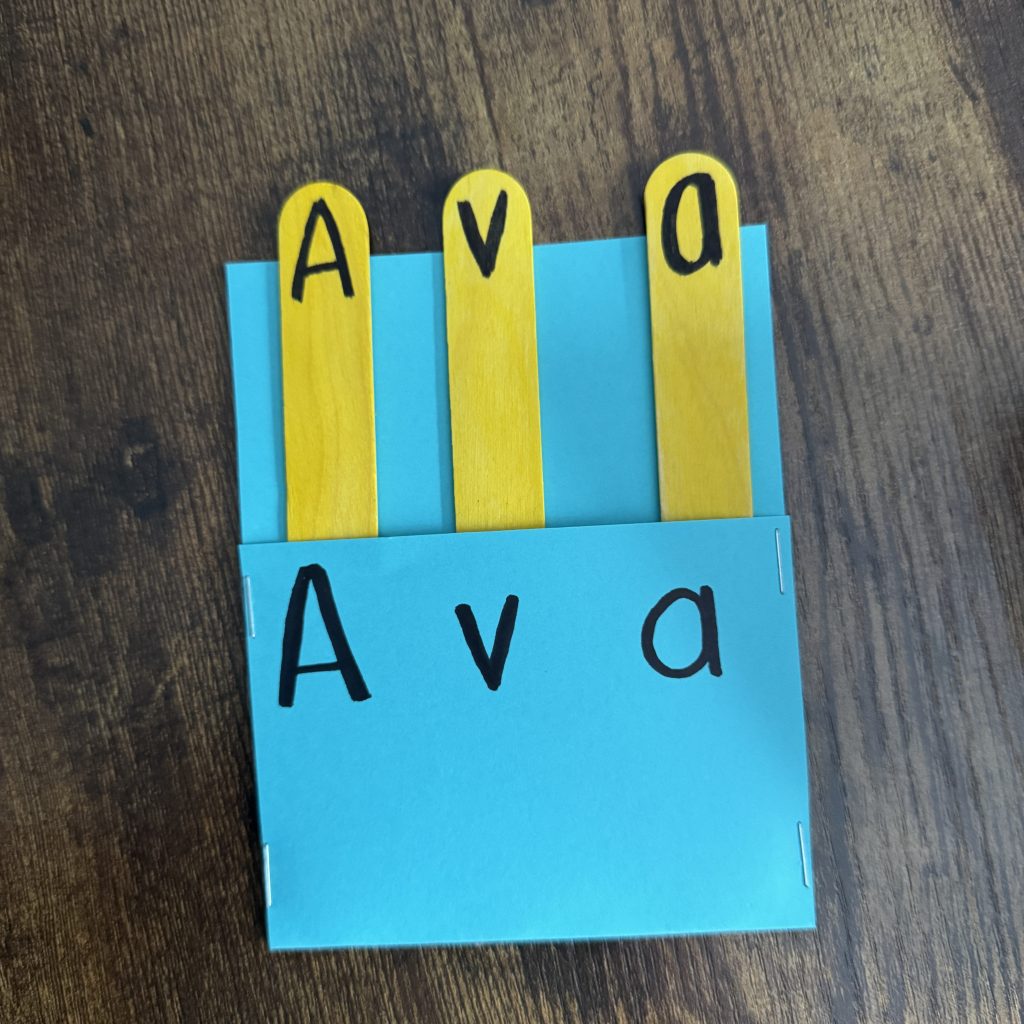
By placing one letter on each craft stick, we break the child’s name into smaller, more manageable pieces. Children can hold and examine each letter before putting the pieces together again.
As they build, children begin to notice:
- The letter their name starts with
- The individual letters inside their name
- The order of those letters
- Which letter comes next
- That print moves from left to right
- That letters come together to make words
Their name becomes more than a familiar shape. It becomes a word they can take apart, explore, and rebuild.
And because it is their word, they already have a reason to care about it.
Things to Use for This Name-Building Activity
This post contains affiliate links. As an Amazon Associate, I earn from qualifying purchases.
You only need craft sticks, paper , a stapler and a permanent markers for the basic activity. I have also included a few optional supplies that can make it easier to prepare, organize, and reuse.
How to Make the Name Building Activity
Write one letter of the child’s name on each craft stick.
For example, the name Ava would have four individual sticks:
A — v— a or A — V — A
Next, create the pocket to put the stick in. I used a vibrant cardstock. This thicker paper will hold up better.
How to Make the Cardstock Pocket:
1. Begin with a sheet of cardstock. Trim it to your preferred size if you would like the finished activity to be smaller.
2. Fold the bottom portion of the cardstock upward to create a pocket deep enough to hold the craft sticks. Press firmly along the fold to create a crisp crease.
3. Secure both sides of the folded section with tape, glue, or staples. Leave the top open so children can place the letter sticks inside.
4. Write or print the child’s complete name across the front of the pocket. This gives the child a visual model to follow while building.
5. Place the sticks inside the pocket. The activity is now ready to store, carry, and use again.
Place the name card and letter sticks together in a small bag, envelope with their picture on it, or container. Now the activity is ready for morning arrival, a literacy area, small group learning, or a quiet invitation during the day.
Ways to Explore the Name-Building Activity
There are many ways to use this activity and differentiating the learning is easy, and grows with little learners.
Match the Letters
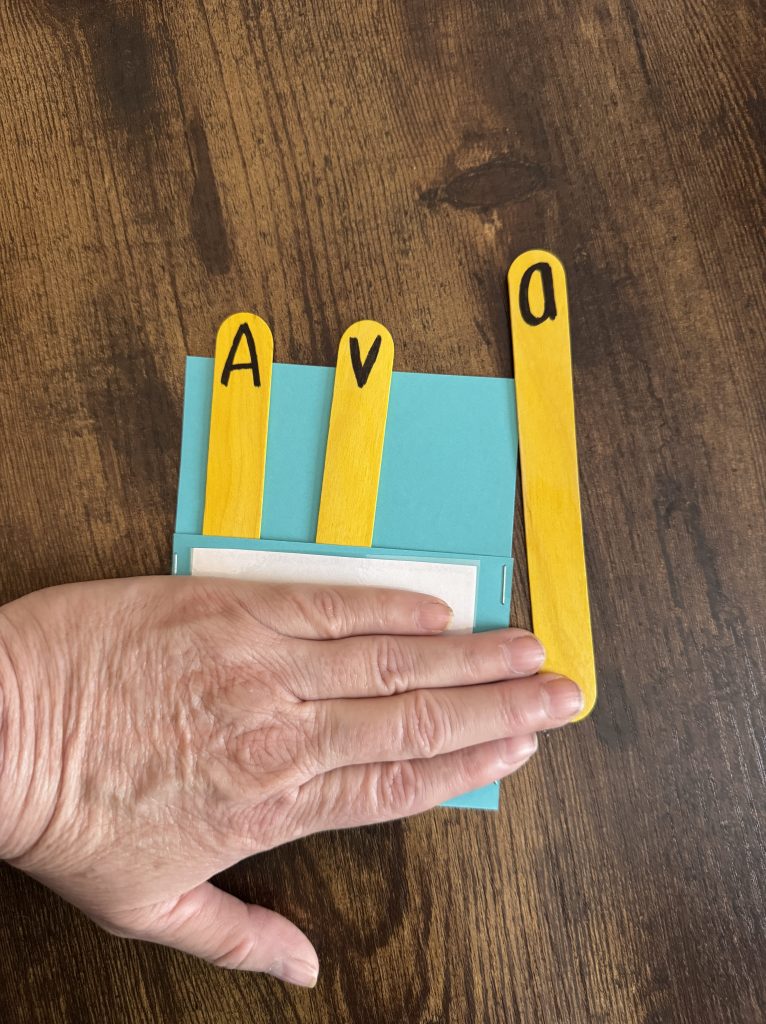
Invite the child to place each craft stick directly over or underneath the matching letter on their name card.
This is a meaningful place to begin. Children can compare the shapes and features of the letters without also having to remember the entire sequence.
You might say:
- “You found the first letter in your name.”
- “What do you notice about that letter?”
- “Can you find the one that matches?”
- “Which letter comes next?”
Matching is not “just” matching. It allows children to slow down, look closely, and begin noticing what makes one letter different from another.
Build the Name Using a Model
Place the name card above the workspace and invite the child to build their name underneath it.
Now the child must look at the model, find the corresponding letter, and place it in the correct position.
This adds another layer of thinking while supporting visual discrimination, one-to-one correspondence, letter order, and left-to-right progression.
Build the Name From Memory
When a child is ready, set the name card aside and invite them to build their name independently
The card can still be available nearby so they can check their work afterward.
That little moment of checking and adjusting is valuable, too. It allows children to notice something for themselves instead of immediately being told that a letter is in the wrong place.
The Learning Taking Root
This may look like a few craft sticks on a table, but there is so much learning growing underneath.
Children are developing:
- Name recognition
- Letter recognition and recall
- An understanding that letters make words
- Visual discrimination
- Letter sequencing
- Left-to-right progression
- One-to-one matching
- Working memory
- Fine-motor coordination
- Early spelling
- Confidence and independence
Moving the pieces makes an abstract idea more concrete.
Instead of only hearing that letters make words, children can hold each letter, move it into position, and watch their own name come together.
The learning begins in their hands.
🌱 Stay Rooted. Guide Wonder.


Leave a Reply