
This post contains affiliate links. I may earn a commission from qualifying purchases at no additional cost to you.
Not everyone gets to be the line leader.
Not everyone gets the blue cup.
And sometimes, just when you’ve built the most magnificent block tower in preschool history, it’s time to clean up.
The nerve. 🙃
Disappointment is part of everyday life, especially when you’re three, four, or five years old and still figuring out how the world works.
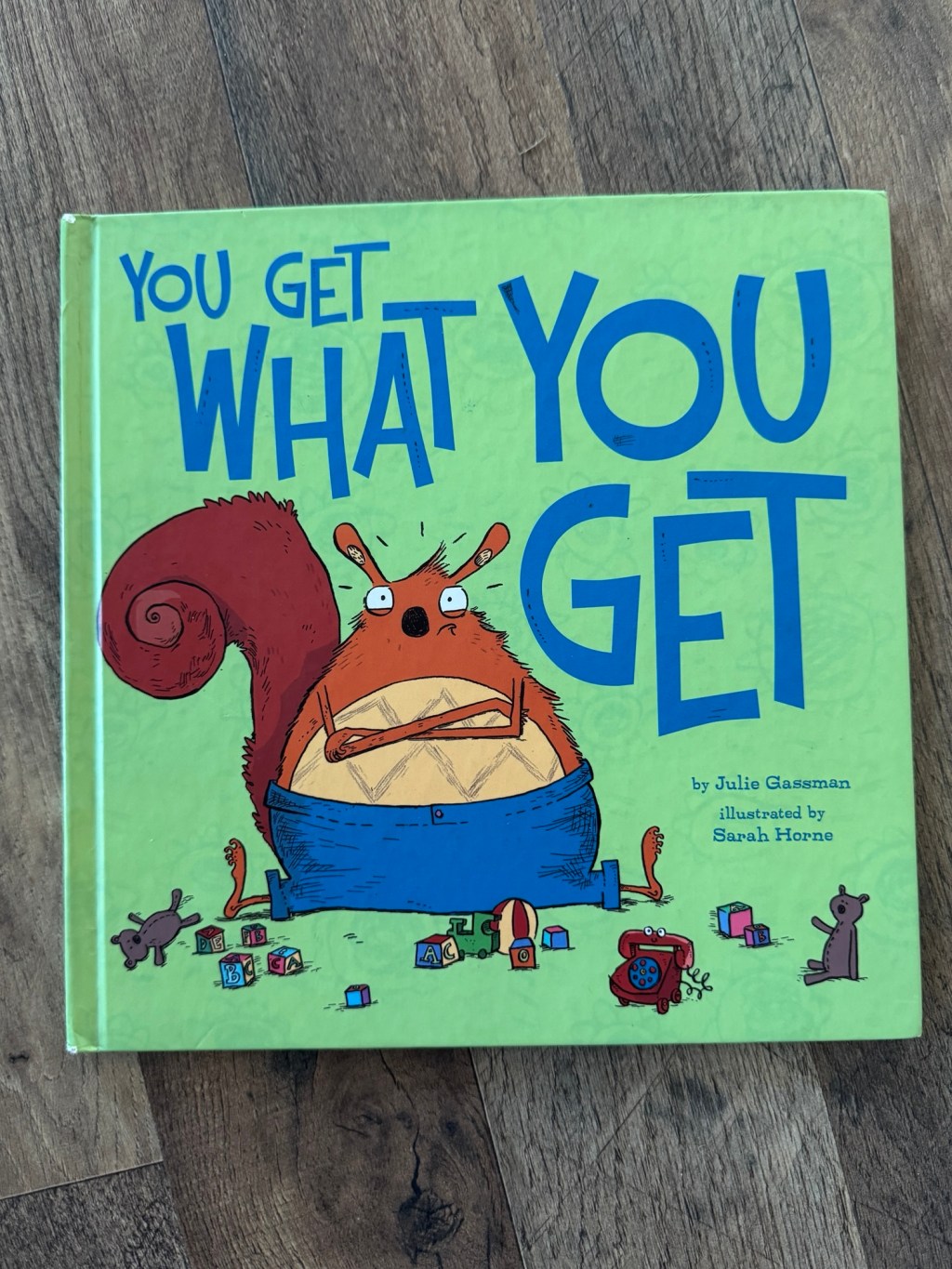
One book I found especially helpful in my preschool & PreK classroom is You Get What You Get, written by Julie Gassman and illustrated by Sarah Horne. I’ve also heard from other educators who are reading it in their Kindergarten, First and Second grade classrooms.
📚 Find You Get What You Get on Amazon
It’s a wonderful book for starting conversations about disappointment, flexibility, and what happens when things don’t go our way.
Meet Melvin. He Had Other Plans.
Melvin doesn’t particularly enjoy being told he can’t have what he wants.
Sound familiar?
One of the reasons children connect with this story and love it so much is that Melvin’s disappointments are so relatable.
He doesn’t get the backpack he wants because they’re all gone.
Now, imagine being a preschooler who had their heart set on THAT backpack.
Not the other one. THAT one.
Children understand that feeling!
And that’s what pulls them into the story. They’ve experienced disappointment over a favorite color, a toy, a turn, or something they really wanted.
The illustrations by Sarah Horne make the story even more engaging. Melvin’s expressions give children opportunities to recognize how he’s feeling. They can also look at his classmates and family members and think about how Melvin’s reactions might affect the people around him.
That’s a lot of social-emotional learning happening during one read-aloud!
It’s Not Always About the Behavior
Think about how many opportunities for disappointment happen during a typical preschool day.
- Someone else gets to be line leader.
- It’s not your turn with a favorite toy.
- You lose a game.
- Playtime ends before you’re ready.
- You don’t get the color or item you wanted.
- It’s soup night and NOT chicken nuggets.
Sometimes those disappointments come with tears, stomping feet, or a dramatic announcement that the entire day is ruined.
But disappointment isn’t bad behavior. It’s a feeling.
Children are learning how to express that feeling and what to do when things don’t go their way.
Our job isn’t to eliminate every disappointment. It’s to help children develop the skills to work through it.
Look at the Pictures!
One of my favorite things to do when reading books like this is to slow down and let children really look at the illustrations.
Ask:
- How do you think Melvin is feeling?
- What do you notice about his face? His body?
- How do you think his classmates feel?
- What about his family? How do they feel?
- Have you ever felt like Melvin and wanted something you couldn’t have?
These conversations help children recognize emotions, consider other people’s perspectives, and connect the story to their own experiences.
And the best part? We’re talking about Melvin’s feelings before anyone has to work through their own big disappointment.
Feel the Feeling. Keep the Boundary.
I love using picture books to introduce social-emotional skills before children need them.
Later, when a child is disappointed about not being line leader, we can acknowledge that feeling while keeping the expectation.
“You really wanted to be line leader today. I understand. Today is someone else’s turn.”
Or when playtime ends:
“You weren’t ready to stop playing. It’s hard to stop when you’re having fun. It’s still time to clean up.”
Children can be disappointed and still follow the expectation.
That doesn’t happen overnight. It takes modeling, practice, and plenty of patience.
A Little Phrase That Sticks!
One of the things I loved most about this book was hearing children use the familiar saying:
“You get what you get, and you don’t throw a fit!”
And they remembered it!
Sometimes they’d say it to a friend who was disappointed about not getting a turn. Other times, I’d hear a child quietly say it to themselves.
That’s the part I loved.
The words from our story were becoming self-talk. Children were beginning to use something we’d practiced together to help themselves navigate disappointment.
Of course, the phrase wasn’t meant to dismiss anyone’s feelings. Children are allowed to be disappointed, frustrated, or upset. We still acknowledge those emotions and help them find appropriate ways to express them.
But hearing children independently pull a phrase from a book and apply it to a real classroom situation?
That’s when you know the learning is moving beyond circle time.
A Little Book With a Big Purpose
You Get What You Get is one of those books I liked having on my classroom shelf because the storyline connects to so many everyday experiences.
It won’t magically eliminate frustration. Wouldn’t that be something?
But it gives children a relatable character, expressive illustrations, and a shared story we can return to when life doesn’t go exactly as planned.
And yes, someone else still gets to be line leader tomorrow.
🌱 Stay Rooted. Guide Wonder


Leave a Reply