This post contains affiliate links. I may earn a commission from qualifying purchases at no additional cost to you.
Grab some colored masking tape, a pair of scissors, and a little imagination. We’re making our own!
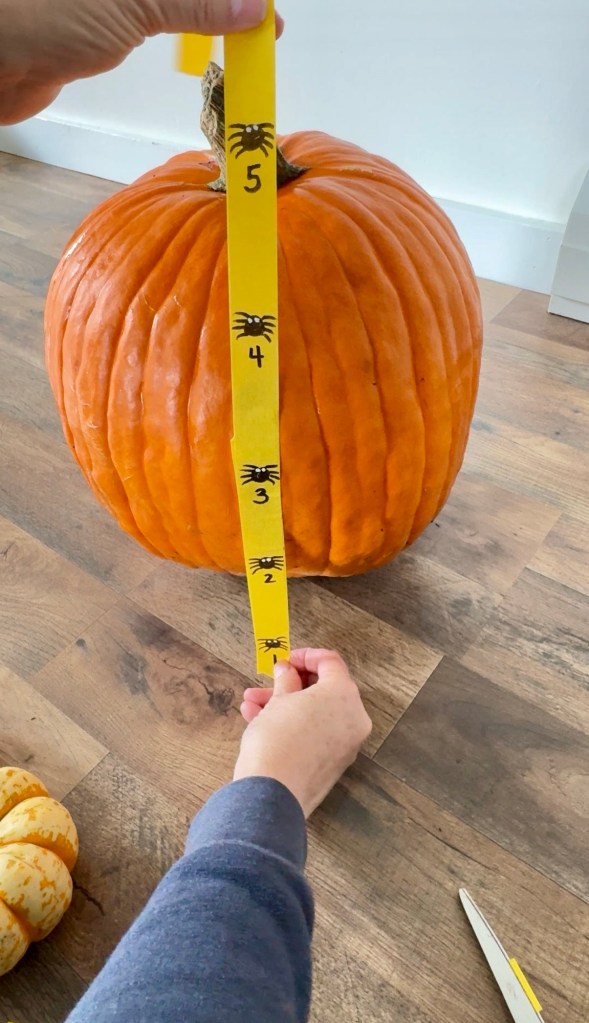
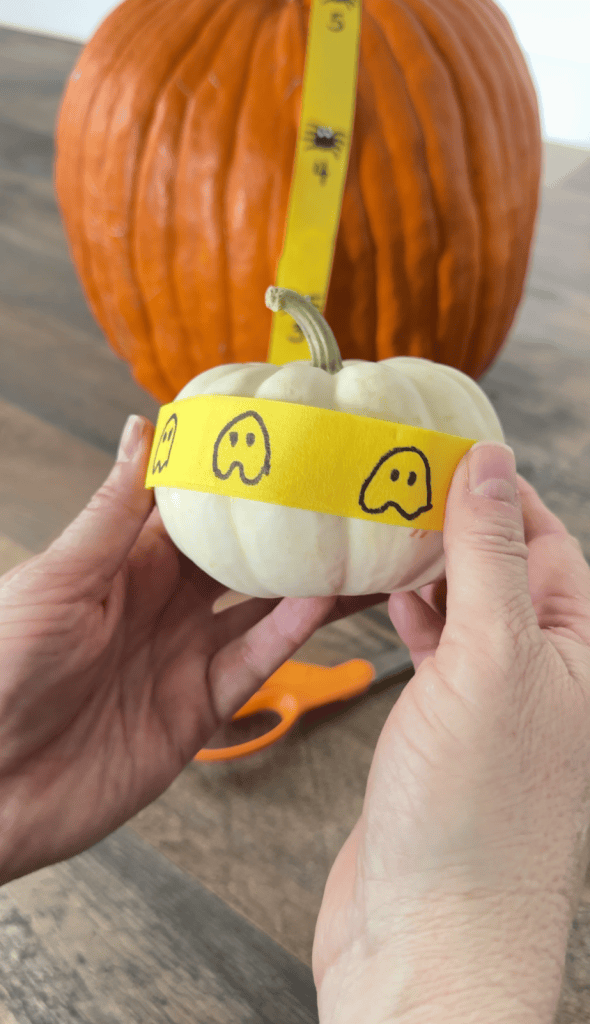
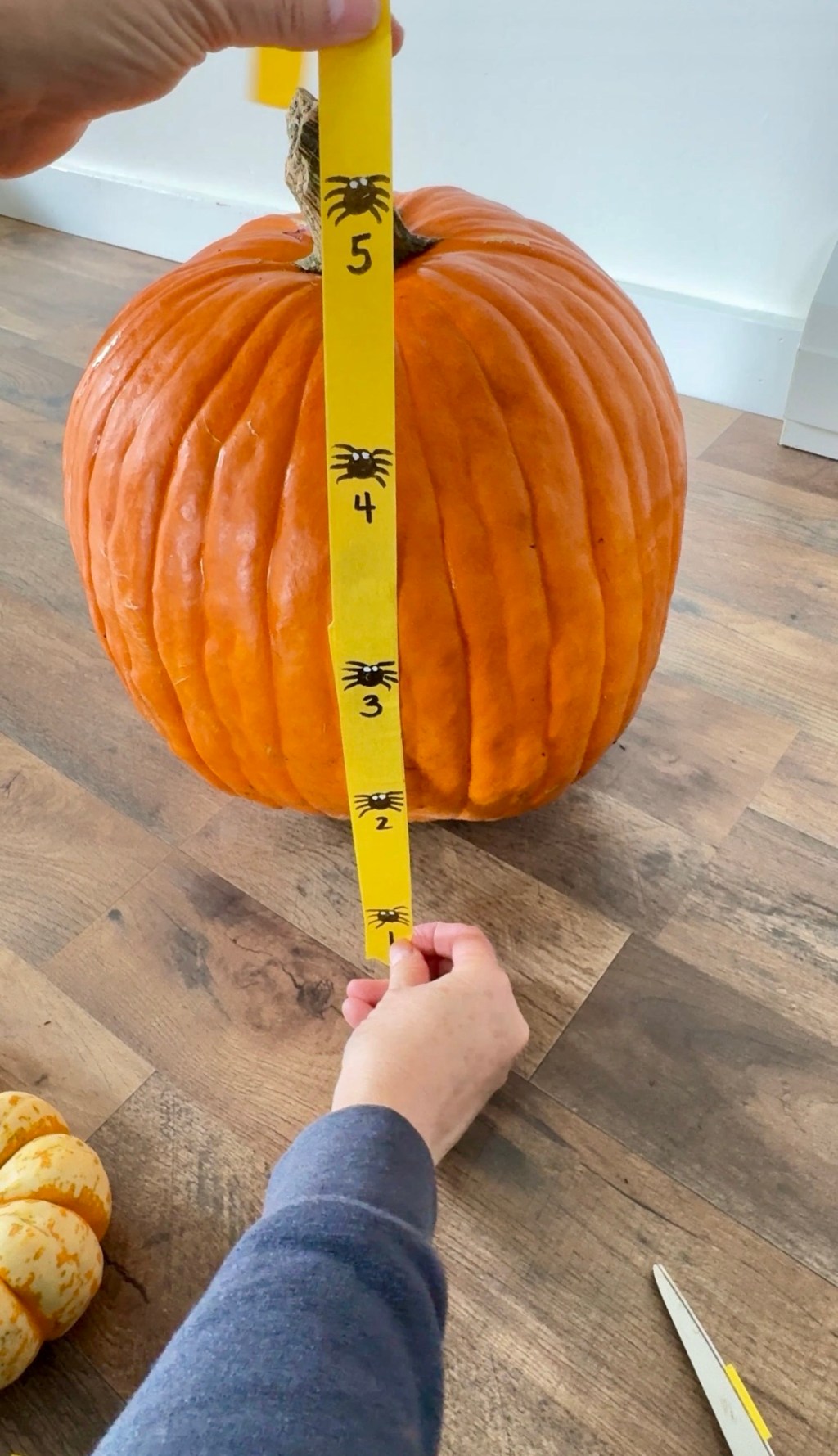
For fall, I made measuring strips with spiders, ghosts, and numbers. We gathered pumpkins, gourds, and board books, and suddenly we had ourselves a math investigation.
No fancy equipment. No worksheets. Just a little tape and a whole lot of learning.
Make Your Own Measuring Tools
All you need is some colored masking tape, a Sharpie and a pair of scissors!
I love using colored masking tape because it’s easy to work with and comes in all kinds of fun colors.
What you’ll need:
- My favorite colored masking tape
- Scissors
- Sharpie Permanent Markers
- A few interesting objects to measure
Cut strips and fold over so the sticky side of the tape is sticking to each other. Then add numbers, marking lines, pictures or shapes and let the early learning measuring begin!
How to Play
Then gather a few objects to explore. Pumpkins, gourds, books, toys, blocks, or whatever happens to be nearby.
Before measuring, encourage children to look, touch, and make predictions.
- Which pumpkin do you think is taller?
- Can you find something shorter than your measuring strip?
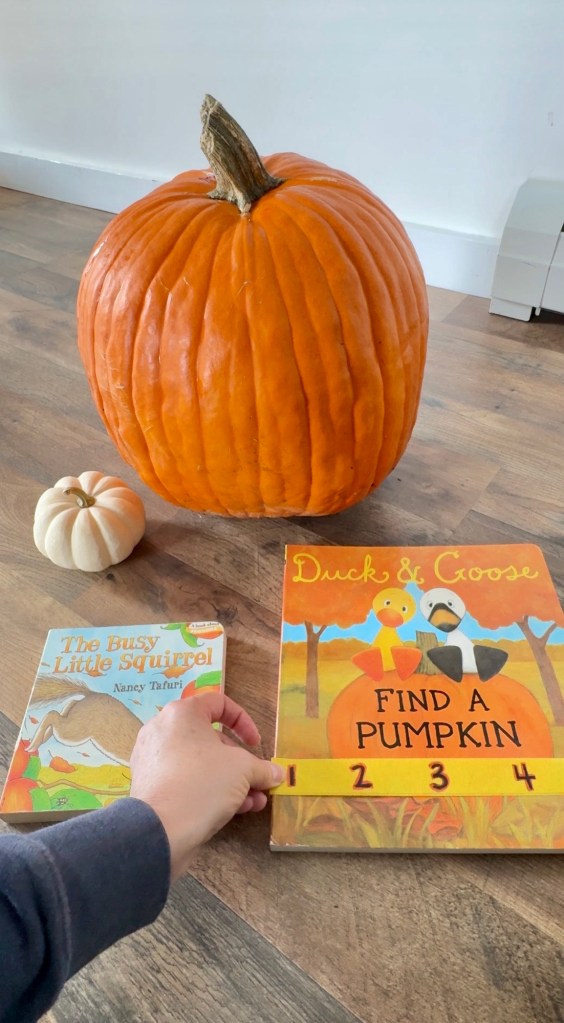
- Which book is longer?
- How could we find out?
Let children line up their measuring strips with the objects, compare lengths, and investigate their predictions.
Little learning tip: Show children how to start measuring at the same point. It’s a simple introduction to accurate measurement!
Wait… This Is Actually Preschool Math?
It sure is!
Ever heard a preschooler announce, “Mine is bigger!” or insist someone else got the larger cookie?
Congratulations. You’ve witnessed early math in action. Possibly with a side of negotiation.
Measurement and comparison are important early math skills. Before children understand inches and centimeters, they need opportunities to explore concepts like longer, shorter, taller, and smaller.
And here’s where real objects make a difference.
A worksheet might ask a child to circle or cut out the bigger pumpkin. But put two actual pumpkins in front of them, and now they can pick them up, turn them around, and compare.
One might be taller. The other might be wider.
Well, look at that. We’ve got ourselves a math investigation!
Hands-on materials allow children to explore math concepts instead of simply identifying answers on paper.
They’re observing, predicting, problem-solving, and using mathematical language.
And unlike a worksheet, the learning doesn’t have to stop when they’ve found the bigger pumpkin.
What about the heaviest? The widest? The one with the longest stem?
Sometimes the best math lesson isn’t on a piece of paper. It’s sitting right there on the table.
Change It With the Seasons!
Once you’ve made your measuring tools, keep the fun going.
Measure leaves in the fall, mittens in the winter, flowers in the spring, or seashells in the summer. If you are doing a color exploration, use that color tape.
You can even invite children to help create their own measuring tools!
Early Learning Standards Connection
This activity supports foundational preschool math skills, including comparing and describing measurable attributes, exploring measurement, and using mathematical vocabulary.
It also builds toward Preschool and Kindergarten Measurement and Data Standards:
- Describe measurable attributes of objects.
- Directly compare two objects with a measurable attribute in common.
The goal isn’t perfect measurements. It’s helping children develop an understanding of what measurement means through real experiences.
Simple materials. Big math.
🌱 Stay Rooted. Guide Wonder.


Leave a Reply